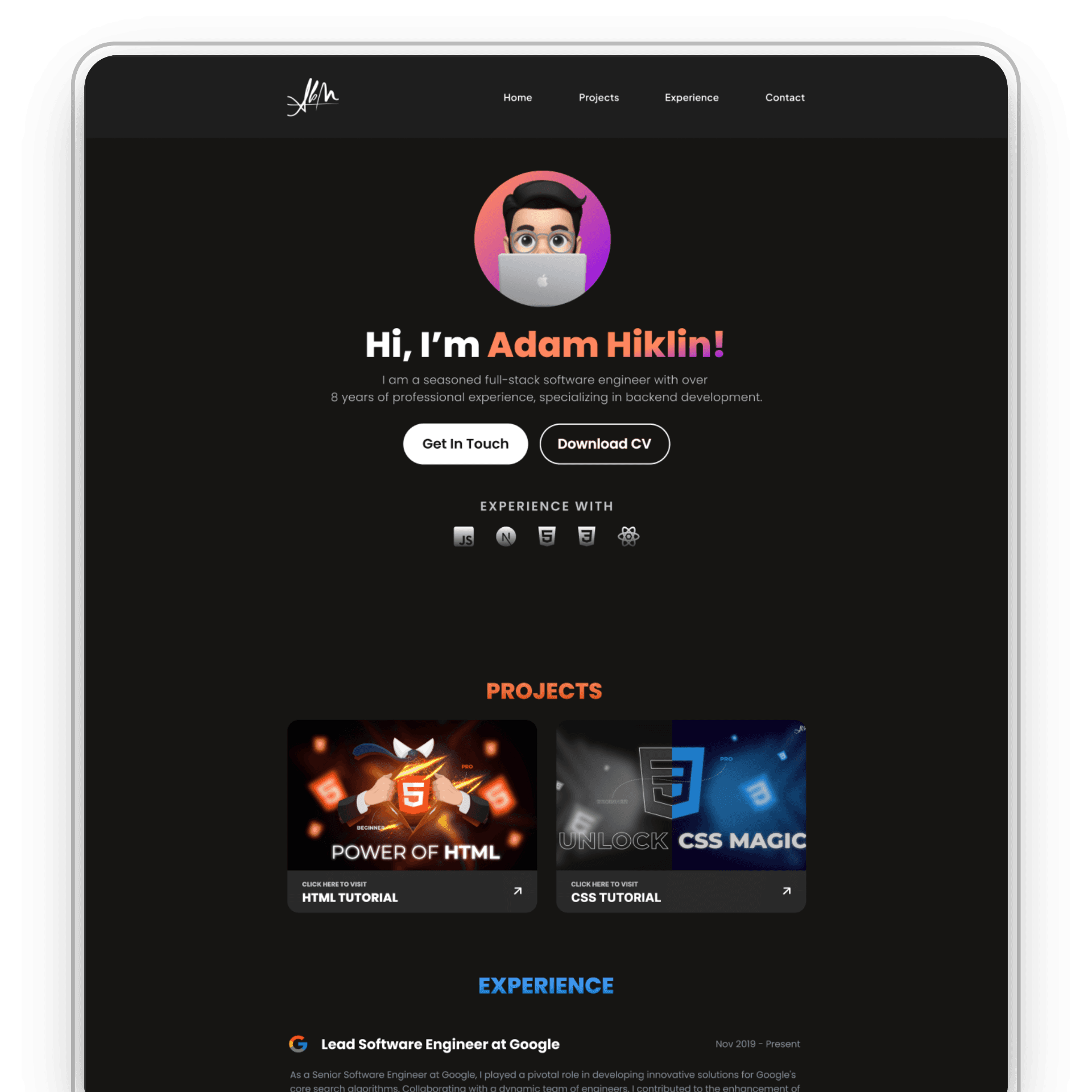
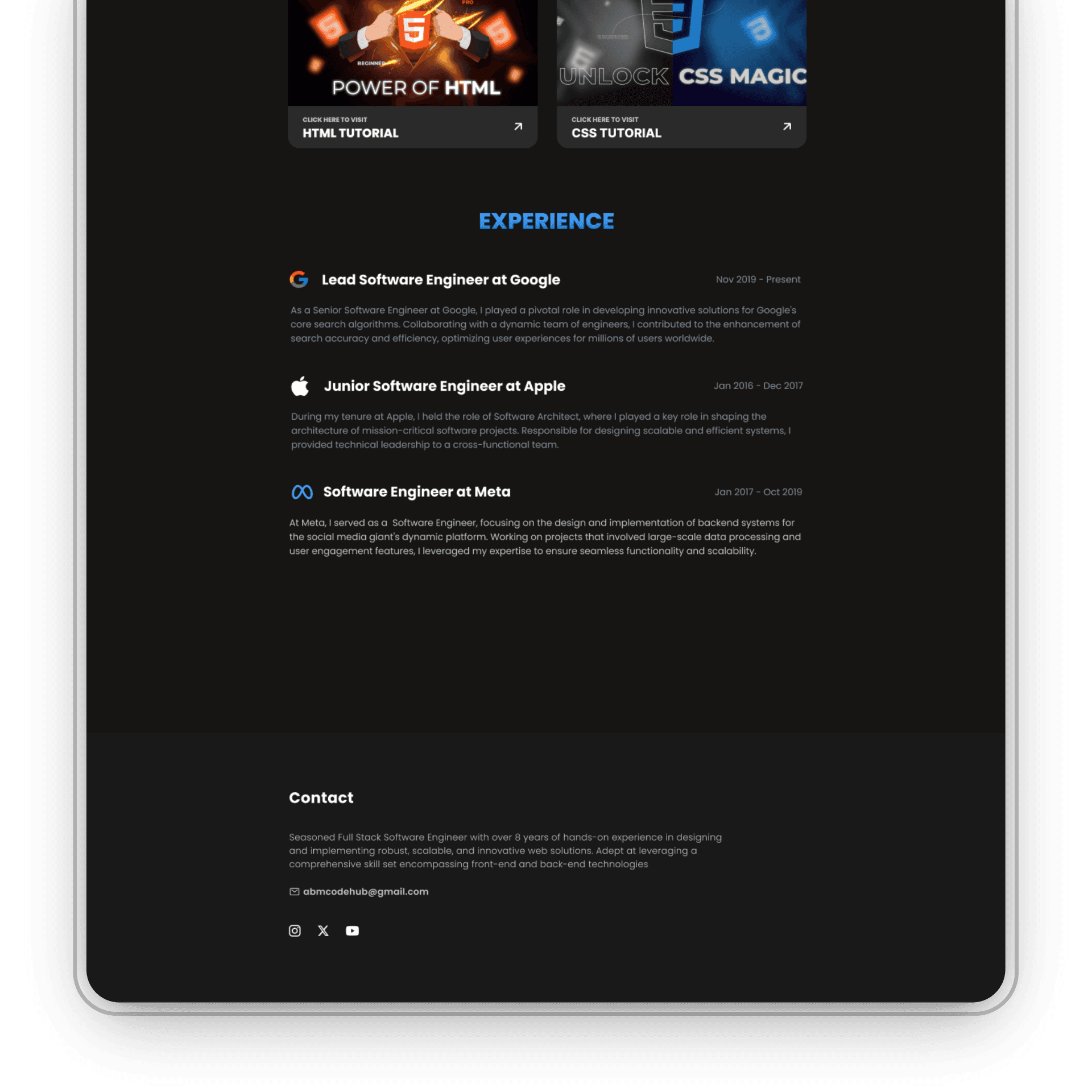
Adam Hiklin Portfolio
Sleek portfolio with bold visuals, smooth flow, and motion.
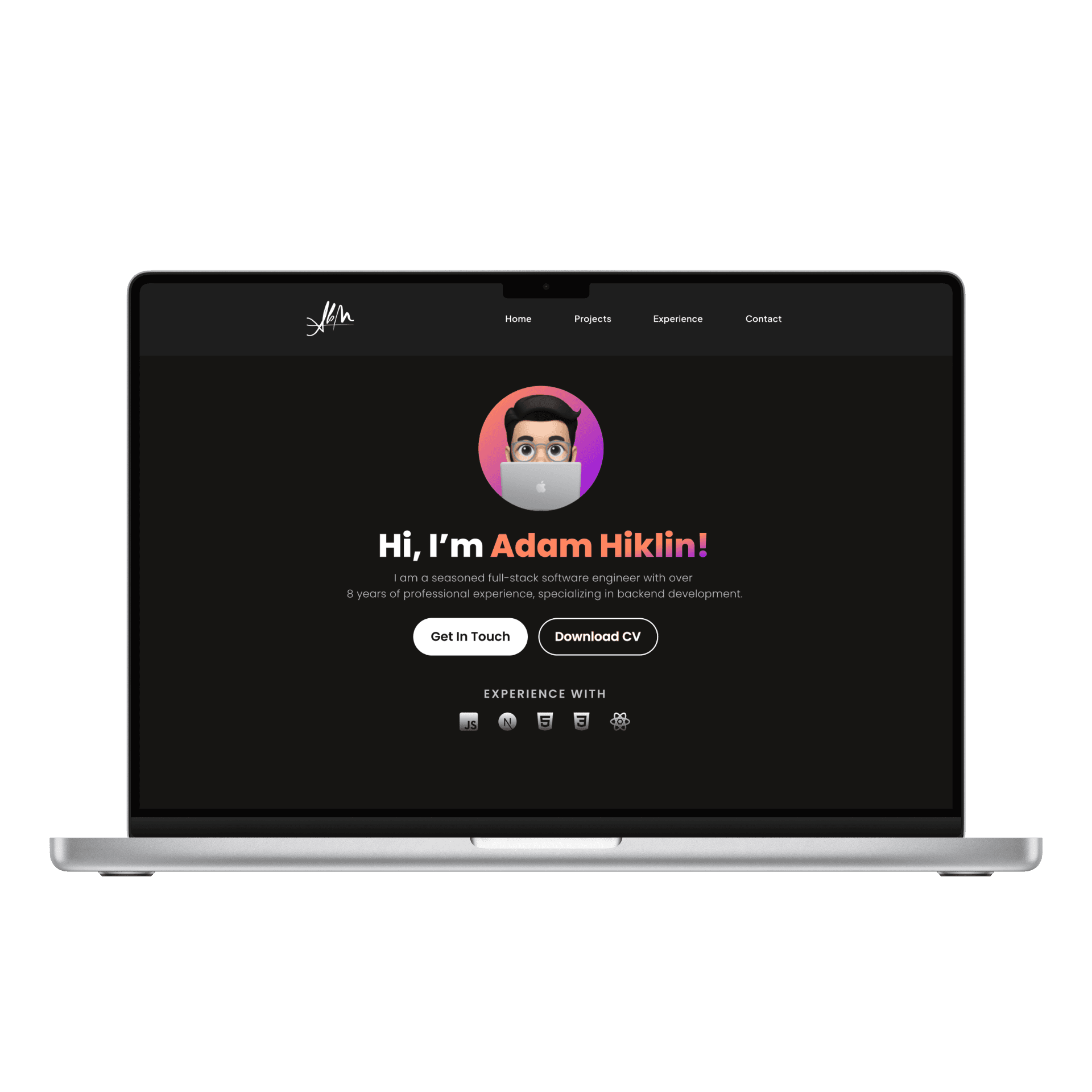



Project Overview
Adam Hicklin's portfolio was designed to reflect the work inside it — bold, intentional, and in motion. The brief called for more than a clean layout; it needed a digital presence that commanded attention from the first scroll. The design challenge was balancing visual impact with usability, ensuring the boldness never got in the way of the work being seen.
Goals
Create a visually impactful personal brand presence
Focus attention on the portfolio content, not the interface
Design fluid navigation with subtle micro-interactions
Develop a layout that adapts seamlessly across devices
The Problem
Most creative portfolios fall into one of two traps: overly minimal to the point of being forgettable, or visually overloaded with no clear hierarchy. For a designer with strong, distinctive work, neither option serves well. The goal was to create a portfolio that felt like an experience — one where the motion and visuals amplified the work rather than competed with it.
Key challenges going into the project:
Creating a visual identity strong enough to be memorable without overshadowing the projects
Designing smooth transitions that felt intentional, not decorative
Maintaining fast, frictionless navigation while supporting rich visual moments
Research & Discovery
I referenced a range of award-winning portfolio sites and motion-heavy design references to map what separates a memorable portfolio from a generic one. ChatGPT was used to help articulate the creative direction early on — pressure-testing the concept of "bold restraint" and refining how that translated into layout and motion principles.
Two guiding questions shaped every decision:
Does this motion serve the content or distract from it?
Would a recruiter or potential client immediately understand who this person is and what they do?
Design Decisions
Bold typographic hierarchy — Large, confident type sets the tone from the hero section. Typography does the heavy lifting for personality, allowing the project visuals to breathe without competing for attention.
Scroll-driven motion — Transitions and reveals were tied to scroll behavior rather than triggered by clicks, creating a sense of continuous flow. Framer was used to prototype and build the motion system, allowing precise control over easing, timing, and layered animations.
Curated project showcases — Each project entry was designed as a visual moment — full-bleed previews with a minimal overlay, revealing just enough to invite a click. The focus was always on the work first.
Structured simplicity — Adobe XD was used for the initial layout exploration and wireframing, establishing the grid, spacing system, and section flow before motion was introduced. This kept the foundation solid before layering complexity on top.
Key Challenges
The biggest tension was motion performance versus visual ambition. Heavy animations can tank load times and feel sluggish on lower-end devices. Every motion element was stress-tested in Framer to ensure it held up across screen sizes, with fallback states designed for reduced-motion preferences — keeping the experience accessible without gutting the design intent.
Outcomes & Reflection
The final portfolio delivers a strong, cohesive first impression with a visual language that feels confident and contemporary. The motion system elevates the browsing experience without ever pulling focus from the work itself.
Next steps would explore adding micro-interactions on the project detail pages and testing the portfolio with real recruiters to validate whether the bold visual direction communicates the intended professional positioning.